

The Anti-Marketing Manifesto: Why Polished Content Is Killing Your Revenue
The music industry's obsession with polished content is costing independent artists real money. Here's the data, the history, and the exact strategy to exploit it.

If you are stalling your next release because you cannot afford a cinematic camera crew or a professional lighting grid, you are actively sabotaging your own financial trajectory.
The era of the hyper-manufactured, million-dollar rollout is officially dying. The modern consumer is completely suffocated by algorithmically perfected, sterile promotional campaigns. Their brains are hardwired to recognize a sales pitch in a fraction of a second. When they see polish with nothing real behind it, they see an advertisement. When they see an advertisement, they swipe.
But don't mistake this for permission to have no plan at all. The smartest artists working right now haven't ditched strategy — they've just stopped letting you see it. This shift even has a name in the industry today: anti-marketing. Not anti-strategy. Anti-fake.
This is the exact historical shift you need to exploit right now. Read the data, audit your current strategy, and execute the blueprint.
The Cultural Pendulum: A Historical Reality Check
This shift is not a temporary glitch. It is a predictable cultural pendulum swing that has dismantled and rebuilt the music business every single decade.
The 1960s Disruption
In the 1950s, media sold a heavily sterilized version of the perfect American dream. The reaction was brutal. The 1960s counterculture hijacked the narrative. Acts that spent the start of the decade in matching suits and choreographed television spots spent the back half of it looking undone in front of the camera — chaotic, live, human. The culture rejected the facade and demanded the real thing.
The Punk Rock Correction
The 1970s brought massive production, disco glamour, and expensive spectacle. The audience eventually became numb to the excess. The direct reaction was the punk rock explosion. Creators weaponized ripped clothes, photocopied fanzines, cheap gear, and a DIY aesthetic that intentionally opposed everything polished. It was dirty, it was raw, and it commanded total attention.
The Current Era
We are leaving a decade of carefully curated, heavily filtered, artificial digital perfection. The market is saturated. The consumer is screaming for reality — and right now, that hunger finally has a name industry-wide: anti-marketing. If you are still trying to look like a highly sanitized pop star, you are entirely misreading the room. The mainstream is fracturing into hundreds of hyper-specific subcultures. You do not need to conquer the entire world; you only need to dominate your specific scene.
Here's the part the trend pieces skip: the artists actually winning this era — the ones building entire creative worlds out of diary entries, voice notes, and unscripted livestreams — are still making deliberate choices about what to reveal and when. Anti-marketing doesn't mean no plan. It means a plan nobody can see.
The Algorithm Isn't Blocking You. Boring Content Is.
You probably think the algorithm hates your music. It does not. It hates content with nothing behind the ask.
Here's the part worth being straight about: platforms have gone on record saying a caption that literally says "link in bio" doesn't, by itself, tank your reach. So if someone told you the algorithm has a built-in ad blocker listening for the word "marketing," that's not quite how the machine works.
What actually happens is simpler, and harder to fake: a post that opens with the ask and offers nothing else gets scrolled past in half a second. Low engagement reads as low quality, and low quality gets buried. A post that opens with something worth watching — the process, the mistake, the moment — earns the watch-through that makes the algorithm push it further, and the ask at the end rides along for free.
So the move isn't banning the word "promotion" from your vocabulary. It's this: never open with the ask. Open with the moment. Let the call to action be the last three seconds, not the first.
The Economics of Anti-Marketing: The Hard Data
The financial mechanics of this era are brutal and highly lucrative. A polished advertisement might earn a passive double tap, but raw documentation builds a fanatic — and the numbers back it up.
Start here: in 2020, self-releasing, direct-to-fan artists with zero label backing grew their collective revenue by 34% and broke the billion-dollar mark globally for the first time in history. That's not the whole independent sector — full independent labels only grew about 7% that same year. The artists closest to their fans, not the mid-size machines around them, are the ones seeing the real surge. That's your lane.
Spotify's own numbers confirm it. In 2023 alone, independent artists and labels earned a record $4.5 billion directly through the platform — the first year independents ever took home roughly half of everything Spotify paid the entire industry. The money is flowing straight to the trenches, bypassing the corporate machine entirely.
Authentic engagement compounds this in ways you can act on immediately. Spotify's own Fan Study found that once a listener adds your track to a personal playlist, that same fan goes on to stream you 41% more and check your profile 12% more than they did before. Even sharper: 60% of all merch bought directly from artist profiles comes from listeners who took that one small action. Authenticity isn't just a creative choice — it's the highest-converting move in your entire funnel, and it starts with one tap you can ask for directly.
The Landlord Problem: You're Renting Every Fan You Have
Here's what the raw-content-only crowd won't tell you: every platform you're building on is borrowed land. The algorithm that loves you today can bury you tomorrow on a single update, and you'll have zero recourse — because you never owned the audience. You were renting attention the entire time.
The fix isn't complicated, it's just unglamorous: capture the email or the phone number. The second someone pre-saves your track, that's a fan raising their hand, and modern pre-save tools can grab their email right at that step with no extra ask required. Music email lists are running open rates north of 30%, and artists who pair their streaming momentum with direct email outreach are converting roughly three times better on a new release than artists working social alone.
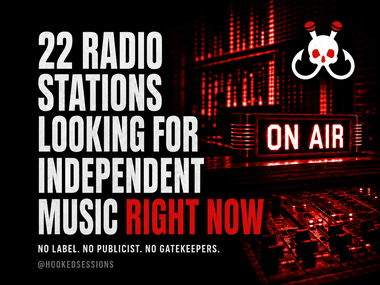
Think of it this way: your content is the buzz. Buzz gets you noticed. Your email and text list is the bond — the relationship no algorithm can delete, throttle, or sell back to you as an ad. Every raw video, every unscripted story, every screen-recorded session should end with one quiet move: send them somewhere you can reach them again without asking anyone's permission. Start with these 22 college radio stations actively looking for independent music right now — a direct submission channel you own the moment you pitch it.
Raw Versus Lazy: The Critical Distinction
Do not confuse anti-marketing with laziness. There is a massive difference between stripping away corporate polish and simply not caring about your presentation.
Lazy: Filming in a dark basement with a smudged camera lens, terrible audio clipping, and zero hook.
Raw: Wiping your phone lens clean, facing a window for natural light, and looking directly into the camera to deliver a highly intentional, unscripted truth about your art.
You are skipping the layers that scream "marketing department," but you must retain absolute focus on the execution.
The 3-Format Execution Strategy
Understanding the psychology is useless if you do not weaponize it. Here is your immediate action plan.
Step 1: Stop Inventing Every Day
You do not need to reinvent the wheel every time you open your phone. Trying to manufacture a viral moment daily leads to burnout and weak creative choices.
Step 2: Lock In Three Formats, Mapped To Where They Actually Work
Pick exactly three repeatable content formats — and match each one to the platform built for it.
Format A (The Breakdown) — built for TikTok. Screen record your logic session and explain the weird sound you used for the snare drum. TikTok's discovery engine can put this in front of thousands of people who've never heard your name; that's the platform's entire job.
Format B (The Live Fire) — built for Instagram Reels. Acoustic guitar, one take, zero edits, mistakes left in. This is where people already a little curious about you decide if they like your vibe. Treat it as your visual brand, not your discovery engine.
Format C (The Story) — built for YouTube Shorts. Direct to camera, explaining the brutal reality of what the lyric actually means. YouTube's search engine keeps this surfacing for months after TikTok and Reels have already forgotten it existed.
Create once, for TikTok, then cut it down for the other two. Don't build three formats from scratch.
Step 3: The 30-Day Campaign, Measured Honestly
Map your three formats over a 30-day calendar. Execute consistently — not relentlessly. A month of daily posting followed by three months of silence is worse than a steady drumbeat, because the single most common thing that kills an independent career isn't a slow start. It's going dark after the initial push.
Track four numbers, not vanity views: saves, playlist adds, watch-through rate, and profile visits. After 30 days, look at the cold data. Keep the formats that won, dump the losers without hesitation, and recalibrate your attack.
The Cost Nobody Puts In These Blueprints
One more thing, because it matters more for you than for an artist who already has a team around them: the exact strategy in this article — open, unscripted, easy to DM, easy to reach — is also exactly what predatory managers and fake "opportunities" are trained to look for. Getting noticed this way will also get you noticed by people who are not your fans.
You don't need a law degree, just a short list of patterns worth knowing: anyone rushing you to sign something before you've had time to think it over, any deal that asks you to pay upfront for "exposure," anyone cagey about how the money actually splits, and anyone who frames your independence as a risk instead of the asset you've built. None of that is legal advice — it's just pattern recognition. Get a real read-through from someone with no stake in the deal before you sign anything that matters.
The Verdict
The industry will never hand you a massive budget to be authentic. You do not need a boardroom to validate your story, and you certainly do not need a cinematic camera to prove your worth. Stop hiding behind high-production safety nets. Build your community by letting them in on the absolute reality of your hustle — then give them one place to find you again the day the algorithm decides not to.
Your first move isn't the 30-day calendar. It's smaller than that: set up one email or text capture link this week, and put it in your bio before you post anything else. Everything in this manifesto works better once you have somewhere to send the people it reaches.
The era of the million-dollar rollout is dying and independent artists are the ones who stand to win. But anti-marketing isn't permission to be lazy — it's a strategy nobody can see. Here's the data, the history, and a 30-day execution plan to exploit the shift right now.
About HOOKED
HOOKED Sessions is Nashville's live songwriter development show. Every Tuesday at The Eighth Room, independent artists perform 60-second original hooks in front of a rotating industry panel. No permission required. No gatekeepers.
The labels built the lanes. We built the bypass.
New episodes every week at hookedsessions.com | @hookedsessions
#gethooked 🪝
Share:


If you are stalling your next release because you cannot afford a cinematic camera crew or a professional lighting grid, you are actively sabotaging your own financial trajectory.
The era of the hyper-manufactured, million-dollar rollout is officially dying. The modern consumer is completely suffocated by algorithmically perfected, sterile promotional campaigns. Their brains are hardwired to recognize a sales pitch in a fraction of a second. When they see polish with nothing real behind it, they see an advertisement. When they see an advertisement, they swipe.
But don't mistake this for permission to have no plan at all. The smartest artists working right now haven't ditched strategy — they've just stopped letting you see it. This shift even has a name in the industry today: anti-marketing. Not anti-strategy. Anti-fake.
This is the exact historical shift you need to exploit right now. Read the data, audit your current strategy, and execute the blueprint.
The Cultural Pendulum: A Historical Reality Check
This shift is not a temporary glitch. It is a predictable cultural pendulum swing that has dismantled and rebuilt the music business every single decade.
The 1960s Disruption
In the 1950s, media sold a heavily sterilized version of the perfect American dream. The reaction was brutal. The 1960s counterculture hijacked the narrative. Acts that spent the start of the decade in matching suits and choreographed television spots spent the back half of it looking undone in front of the camera — chaotic, live, human. The culture rejected the facade and demanded the real thing.
The Punk Rock Correction
The 1970s brought massive production, disco glamour, and expensive spectacle. The audience eventually became numb to the excess. The direct reaction was the punk rock explosion. Creators weaponized ripped clothes, photocopied fanzines, cheap gear, and a DIY aesthetic that intentionally opposed everything polished. It was dirty, it was raw, and it commanded total attention.
The Current Era
We are leaving a decade of carefully curated, heavily filtered, artificial digital perfection. The market is saturated. The consumer is screaming for reality — and right now, that hunger finally has a name industry-wide: anti-marketing. If you are still trying to look like a highly sanitized pop star, you are entirely misreading the room. The mainstream is fracturing into hundreds of hyper-specific subcultures. You do not need to conquer the entire world; you only need to dominate your specific scene.
Here's the part the trend pieces skip: the artists actually winning this era — the ones building entire creative worlds out of diary entries, voice notes, and unscripted livestreams — are still making deliberate choices about what to reveal and when. Anti-marketing doesn't mean no plan. It means a plan nobody can see.
The Algorithm Isn't Blocking You. Boring Content Is.
You probably think the algorithm hates your music. It does not. It hates content with nothing behind the ask.
Here's the part worth being straight about: platforms have gone on record saying a caption that literally says "link in bio" doesn't, by itself, tank your reach. So if someone told you the algorithm has a built-in ad blocker listening for the word "marketing," that's not quite how the machine works.
What actually happens is simpler, and harder to fake: a post that opens with the ask and offers nothing else gets scrolled past in half a second. Low engagement reads as low quality, and low quality gets buried. A post that opens with something worth watching — the process, the mistake, the moment — earns the watch-through that makes the algorithm push it further, and the ask at the end rides along for free.
So the move isn't banning the word "promotion" from your vocabulary. It's this: never open with the ask. Open with the moment. Let the call to action be the last three seconds, not the first.
The Economics of Anti-Marketing: The Hard Data
The financial mechanics of this era are brutal and highly lucrative. A polished advertisement might earn a passive double tap, but raw documentation builds a fanatic — and the numbers back it up.
Start here: in 2020, self-releasing, direct-to-fan artists with zero label backing grew their collective revenue by 34% and broke the billion-dollar mark globally for the first time in history. That's not the whole independent sector — full independent labels only grew about 7% that same year. The artists closest to their fans, not the mid-size machines around them, are the ones seeing the real surge. That's your lane.
Spotify's own numbers confirm it. In 2023 alone, independent artists and labels earned a record $4.5 billion directly through the platform — the first year independents ever took home roughly half of everything Spotify paid the entire industry. The money is flowing straight to the trenches, bypassing the corporate machine entirely.
Authentic engagement compounds this in ways you can act on immediately. Spotify's own Fan Study found that once a listener adds your track to a personal playlist, that same fan goes on to stream you 41% more and check your profile 12% more than they did before. Even sharper: 60% of all merch bought directly from artist profiles comes from listeners who took that one small action. Authenticity isn't just a creative choice — it's the highest-converting move in your entire funnel, and it starts with one tap you can ask for directly.
The Landlord Problem: You're Renting Every Fan You Have
Here's what the raw-content-only crowd won't tell you: every platform you're building on is borrowed land. The algorithm that loves you today can bury you tomorrow on a single update, and you'll have zero recourse — because you never owned the audience. You were renting attention the entire time.
The fix isn't complicated, it's just unglamorous: capture the email or the phone number. The second someone pre-saves your track, that's a fan raising their hand, and modern pre-save tools can grab their email right at that step with no extra ask required. Music email lists are running open rates north of 30%, and artists who pair their streaming momentum with direct email outreach are converting roughly three times better on a new release than artists working social alone.
Think of it this way: your content is the buzz. Buzz gets you noticed. Your email and text list is the bond — the relationship no algorithm can delete, throttle, or sell back to you as an ad. Every raw video, every unscripted story, every screen-recorded session should end with one quiet move: send them somewhere you can reach them again without asking anyone's permission. Start with these 22 college radio stations actively looking for independent music right now — a direct submission channel you own the moment you pitch it.
Raw Versus Lazy: The Critical Distinction
Do not confuse anti-marketing with laziness. There is a massive difference between stripping away corporate polish and simply not caring about your presentation.
Lazy: Filming in a dark basement with a smudged camera lens, terrible audio clipping, and zero hook.
Raw: Wiping your phone lens clean, facing a window for natural light, and looking directly into the camera to deliver a highly intentional, unscripted truth about your art.
You are skipping the layers that scream "marketing department," but you must retain absolute focus on the execution.
The 3-Format Execution Strategy
Understanding the psychology is useless if you do not weaponize it. Here is your immediate action plan.
Step 1: Stop Inventing Every Day
You do not need to reinvent the wheel every time you open your phone. Trying to manufacture a viral moment daily leads to burnout and weak creative choices.
Step 2: Lock In Three Formats, Mapped To Where They Actually Work
Pick exactly three repeatable content formats — and match each one to the platform built for it.
Format A (The Breakdown) — built for TikTok. Screen record your logic session and explain the weird sound you used for the snare drum. TikTok's discovery engine can put this in front of thousands of people who've never heard your name; that's the platform's entire job.
Format B (The Live Fire) — built for Instagram Reels. Acoustic guitar, one take, zero edits, mistakes left in. This is where people already a little curious about you decide if they like your vibe. Treat it as your visual brand, not your discovery engine.
Format C (The Story) — built for YouTube Shorts. Direct to camera, explaining the brutal reality of what the lyric actually means. YouTube's search engine keeps this surfacing for months after TikTok and Reels have already forgotten it existed.
Create once, for TikTok, then cut it down for the other two. Don't build three formats from scratch.
Step 3: The 30-Day Campaign, Measured Honestly
Map your three formats over a 30-day calendar. Execute consistently — not relentlessly. A month of daily posting followed by three months of silence is worse than a steady drumbeat, because the single most common thing that kills an independent career isn't a slow start. It's going dark after the initial push.
Track four numbers, not vanity views: saves, playlist adds, watch-through rate, and profile visits. After 30 days, look at the cold data. Keep the formats that won, dump the losers without hesitation, and recalibrate your attack.
The Cost Nobody Puts In These Blueprints
One more thing, because it matters more for you than for an artist who already has a team around them: the exact strategy in this article — open, unscripted, easy to DM, easy to reach — is also exactly what predatory managers and fake "opportunities" are trained to look for. Getting noticed this way will also get you noticed by people who are not your fans.
You don't need a law degree, just a short list of patterns worth knowing: anyone rushing you to sign something before you've had time to think it over, any deal that asks you to pay upfront for "exposure," anyone cagey about how the money actually splits, and anyone who frames your independence as a risk instead of the asset you've built. None of that is legal advice — it's just pattern recognition. Get a real read-through from someone with no stake in the deal before you sign anything that matters.
The Verdict
The industry will never hand you a massive budget to be authentic. You do not need a boardroom to validate your story, and you certainly do not need a cinematic camera to prove your worth. Stop hiding behind high-production safety nets. Build your community by letting them in on the absolute reality of your hustle — then give them one place to find you again the day the algorithm decides not to.
Your first move isn't the 30-day calendar. It's smaller than that: set up one email or text capture link this week, and put it in your bio before you post anything else. Everything in this manifesto works better once you have somewhere to send the people it reaches.
The era of the million-dollar rollout is dying and independent artists are the ones who stand to win. But anti-marketing isn't permission to be lazy — it's a strategy nobody can see. Here's the data, the history, and a 30-day execution plan to exploit the shift right now.
About HOOKED
HOOKED Sessions is Nashville's live songwriter development show. Every Tuesday at The Eighth Room, independent artists perform 60-second original hooks in front of a rotating industry panel. No permission required. No gatekeepers.
The labels built the lanes. We built the bypass.
New episodes every week at hookedsessions.com | @hookedsessions
#gethooked 🪝
Share:

Discover More Latest Blogs
Discover More Latest Blogs


Inside Access Starts Here
Be first in line for performer lineups, panel announcements, live seat availability, and livestream access — before the room fills up and the mic goes live.
Be the first to know
Inside Access Starts Here
Be first in line for performer lineups, panel announcements, live seat availability, and livestream access — before the room fills up and the mic goes live.
Be the first to know
Inside Access Starts Here
Be first in line for performer lineups, panel announcements, live seat availability, and livestream access — before the room fills up and the mic goes live.
Be the first to know